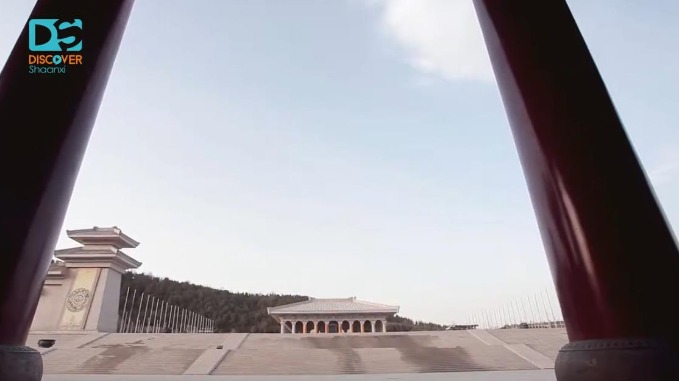
Mausoleum of Yellow Emperor
Introduction
The Mausoleum of the Yellow Emperor, located in Huangling county, Yan'an, Shaanxi province, is a significant historical and cultural site. It is revered as the burial site of the Yellow Emperor, also known as Huangdi, who is regarded as the mythical ancestor of the Chinese civilization and a legendary figure in Chinese history. The site holds immense cultural and historical value, symbolizing the origins of the Chinese people and their enduring cultural legacy.
Historical Significance
The Yellow Emperor is a pivotal figure in ancient Chinese mythology and is often credited as one of the founding ancestors of Chinese civilization. He is associated with numerous cultural and technological advancements. The Mausoleum of the Yellow Emperor serves as a monument to this legendary ruler and the rich heritage he represents.
Location and Setting
The mausoleum is situated on Qiaoshan Mountain, which is approximately 1,200 meters above sea level. The location is surrounded by lush forests and scenic landscapes, which add to its serene and majestic atmosphere. The site encompasses several key features, including the tomb itself, a temple dedicated to the Yellow Emperor, and various steles and inscriptions that commemorate his contributions to Chinese culture.
Architectural Features
The Mausoleum of the Yellow Emperor is characterized by its traditional Chinese architectural elements, which reflect the cultural and historical context of the site. The main tomb area is marked by a large mound and is surrounded by ancient trees, some of which are believed to be over a thousand years old. The temple within the complex serves as a place of worship and reflection, where visitors can pay their respects to the Yellow Emperor.
Cultural Importance
The mausoleum is not only a site of historical interest but also a place of cultural celebration. It hosts various ceremonies and events that honor the contributions of the Yellow Emperor to Chinese civilization. These events often include traditional music, dance, and rituals that highlight the enduring legacy of Chinese culture and its deep-rooted connection to its ancestral origins.








